In today’s healthcare landscape, the demand for rapid lab testing results is growing. According to a report by the American Clinical Laboratory Association, turnaround time directly impacts patient outcomes and care efficiency. Hospitals face increasing pressure to deliver results faster. This raises the critical question: how to improve turnaround time in lab testing?
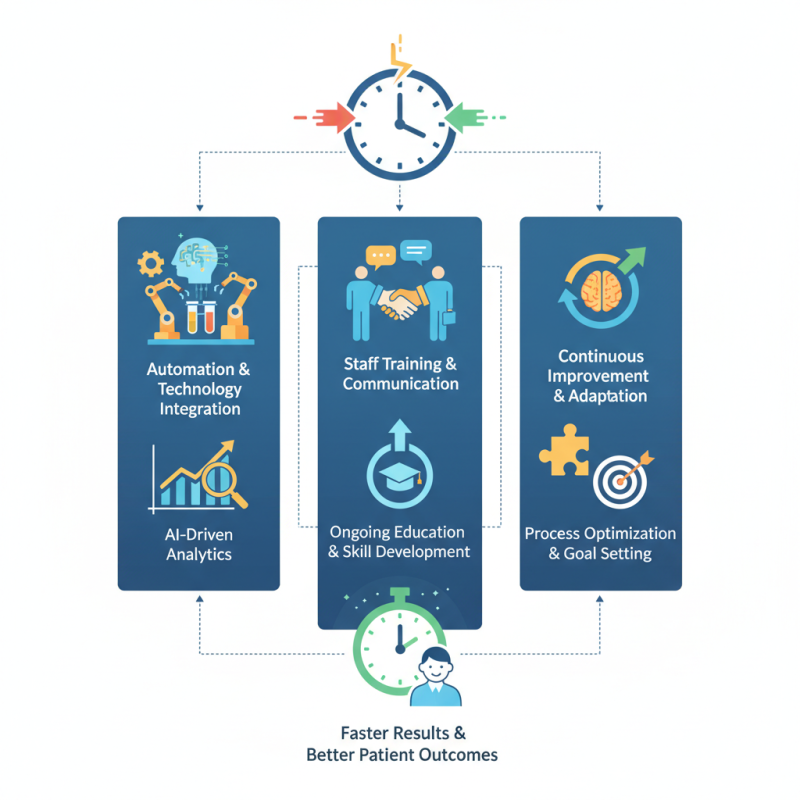
Improving turnaround time requires a multifaceted approach. Automation and technology integration play vital roles. For instance, implementing AI-driven analytics can streamline workflows. Yet, many labs still rely on outdated practices. A study from the National Institute of Health indicates that nearly 50% of labs experience delays due to manual processes. This highlights a significant opportunity for improvement.
Moreover, staff training and effective communication can enhance efficiency. Empowering laboratory professionals with the right skills directly influences lab effectiveness. However, many organizations overlook ongoing education. A focus on continuous improvement and adaptation is essential. By addressing these challenges, laboratories can significantly reduce turnaround times and better serve patients.
Strategies to Streamline Sample Collection Processes in Lab Testing
Optimizing sample collection processes is crucial for reducing turnaround times in lab testing. First, consider the training of staff. Well-trained personnel can execute the collection more efficiently. Regular workshops on the latest techniques enhance their skills and confidence. Efficiency gains are often rooted in proper training.
Streamlining sample management is another effective strategy. Clearly labeled containers can prevent mix-ups and reduce errors. Implementing a digital tracking system can maintain organization, allowing real-time updates on sample status. Attention to detail in these processes can significantly cut delays.
In some labs, time lost in administrative tasks is significant. Digital solutions can automate these processes, but not all labs adopt them equally. Regular reviews of these systems could shine a light on inefficiencies. Being open to feedback from the staff can reveal overlooked issues and potential improvements. It’s crucial to remember that no system is perfect; ongoing assessment is necessary to ensure progress.
2026 Best Tips to Improve Turnaround Time in Lab Testing
Leveraging Automation Technologies to Enhance Lab Testing Efficiency
In recent years, automation technologies have become crucial in enhancing lab testing efficiency. According to a report from the American Clinical Laboratory Association, about 70% of medical decisions depend on lab results. This heavy reliance means even a slight improvement in turnaround times can significantly affect patient outcomes. Automation can reduce human errors, streamline workflows, and ultimately cut down on testing times.
Integrating robotic processes into laboratories has shown promising results. A study from the National Institute of Health highlights that labs utilizing automated systems can process tests 50% faster than their manual counterparts. However, transitioning to automation isn't always seamless. Some labs face resistance from staff or struggle with integrating new systems into existing workflows. Continuous training and fostering a culture of adaptability are essential for maximizing the benefits of automation.
Moreover, data management plays a pivotal role. Efficient data handling can speed up analysis and reporting times. Yet, many labs still grapple with outdated software and fragmented data systems. Embracing cloud technology could enhance data accessibility and interoperability. This shift may present challenges, but the potential for improved efficiency makes it a worthy endeavor for any lab aiming to enhance their turnaround times.
Implementing Real-Time Tracking Systems for Improved Turnaround Time
Implementing real-time tracking systems can significantly enhance turnaround time in laboratory testing. According to a recent report by the Clinical Laboratory Improvement Amendments (CLIA), labs with active tracking mechanisms reduce test processing times by up to 30%. Real-time data allows for efficient workflow management and minimizes bottlenecks. By utilizing digital tracking tools, labs can monitor samples and tests at each stage of the process.
Moreover, many laboratories have seen improvements in communication and accountability. A study published in the Clinical Biochemistry Journal indicated that labs investing in tracking software experienced a 20% decrease in mislabeling incidents. This improvement directly correlates with faster turnaround times. When lab personnel can identify and address delays quickly, the overall efficiency improves. However, implementing such systems requires adequate training and adaptation by staff.
Despite the clear benefits, some labs face challenges in integration. Staff may resist changes to established workflows. Training sessions often reveal gaps in understanding new technologies. Continuous evaluation and feedback mechanisms are crucial. Labs must remain open to refining their processes to truly capitalize on real-time tracking capabilities. Without these adjustments, the expected benefits may not be fully realized.
Training and Workforce Management to Optimize Laboratory Productivity
To enhance laboratory productivity, effective training and workforce management are crucial. A study from the American Society for Clinical Laboratory Science indicates that proper training can reduce turnaround times by up to 20%. Well-trained staff can perform tests more efficiently, minimizing errors and increasing patient satisfaction.
Engaging and empowering laboratory personnel is vital. Regular workshops and hands-on training sessions can significantly boost skills. However, not all labs have the resources for ongoing education. Many laboratories report that outdated processes still hinder their capacity. Finding time for training amidst busy schedules is a common struggle. Creating designated training hours may not always be feasible in high-demand environments.
Additionally, leveraging technology can improve workforce management. Implementing scheduling software allows for better allocation of resources. However, reliance on technology can also pose challenges. Staff must adapt to new systems, which may initially disrupt workflows. Despite these hurdles, investing in a knowledgeable workforce yields long-term benefits. The key lies in balancing technology with effective training programs to achieve optimal efficiency.
2026 Best Tips to Improve Turnaround Time in Lab Testing
| Tips |
Description |
Expected Impact (%) |
Implementation Time (Weeks) |
| Staff Training |
Regular training sessions for laboratory staff to enhance skills and knowledge |
20% |
4 |
| Workflow Optimization |
Streamlining processes to minimize bottlenecks in testing |
15% |
6 |
| Technology Upgrade |
Investing in the latest laboratory equipment and software |
25% |
8 |
| Quality Control |
Implementing strict quality control measures to reduce errors |
30% |
5 |
| Data Management |
Improving data entry and management systems for faster reporting |
10% |
3 |
Analyzing Data Trends to Identify Bottlenecks in Lab Testing Operations
In lab testing, data trends reveal critical insights into operational bottlenecks. A recent industry report indicated that up to 30% of delays stem from sample collection issues. Understanding these delays allows laboratories to implement targeted improvements. By analyzing turnaround time (TAT) data, labs can visualize where bottlenecks occur, allowing for efficient resource allocation.
A tip to improve TAT is to streamline communication among lab technicians. For instance, using a centralized system for real-time updates can reduce misunderstandings. Reports show that labs using collaborative tools reported a 25% reduction in errors. Another suggestion involves automating routine tasks. Automation can significantly cut down processing time and enhance accuracy.
Lastly, regular training sessions for staff create a knowledgeable workforce. Continuous education helps employees adapt to changes swiftly. A study found that labs with regular training programs saw an increase in TAT efficiency by up to 15%. Recognizing these nuances and actively seeking solutions can gradually enhance lab operations.
FAQS
: Real-time tracking systems can reduce test processing times by up to 30%. They enhance workflow management and minimize delays.
Labs that invest in tracking software experience a 20% decrease in mislabeling incidents, improving overall communication and accountability.
Staff may resist changes to workflows. Training can reveal understanding gaps, complicating integration efforts.
Proper training can reduce turnaround times by up to 20%. Well-trained staff perform tests efficiently, leading to fewer errors.
Scheduling software can improve resource allocation but may disrupt workflows during the adaptation period.
Analyzing data helps identify bottlenecks. Up to 30% of delays come from sample collection issues, revealing improvement areas.
A centralized system for real-time updates can cut misunderstandings and reduce errors by 25%.
Regular training sessions create knowledgeable staff. Continuous education leads to a 15% increase in turnaround time efficiency.
Automating routine tasks cuts processing time and increases accuracy, aiding overall lab efficiency.
Continuous evaluation and feedback are necessary. Without adaptation, expected benefits from tracking systems may fall short.
Conclusion
In the quest to enhance laboratory efficiency, knowing how to improve turnaround time in lab testing is crucial. One effective strategy is to streamline sample collection processes, which can significantly reduce delays. Additionally, leveraging automation technologies can further enhance efficiency, minimizing manual errors and expediting workflows. Implementing real-time tracking systems allows laboratories to monitor samples throughout the testing process, which aids in pinpointing delays more effectively.
Another important aspect is the training and management of laboratory personnel, as a skilled workforce plays a vital role in optimizing productivity. Finally, analyzing data trends to identify bottlenecks can provide invaluable insights into operations, enabling labs to address issues proactively. By integrating these strategies, laboratories can achieve faster turnaround times and improve overall testing efficiency.

 Mosholu Medical